Choosing the Right Container for Cremation: Economy vs. Premium and When Each Makes Sense
Cremation containers may appear straightforward on the surface, but choosing the right one for a facility’s workflow can make a noticeable difference in efficiency, movement, safety, presentation, and overall handling. For funeral homes and crematoriums, the real questions are not simply about price — they’re about utility: how the container will be used, how often it will be lifted or transported, and how well it will stand up during those moments.
This guide breaks down the operational differences between cremation container types, particularly economy vs. premium, and offers practical scenarios for when each makes sense. While the product details matter, it is ultimately facility workflow that determines what is “right.”
Why Cremation Container Selection Matters
Every funeral home and crematory operates differently. Some cremate on-site and rarely lift or move containers; others transport remains across town or between buildings, often multiple times. Some facilities serve lower-volume communities; others handle dozens of cremations each week in demanding work environments.
Because of that variation, a container choice that works well for one facility may be inefficient or risky for another. The goal is to match the container to the reality of how it will be used.
When funeral professionals call for guidance, uncertainty is usually driven by one of three concerns:
- Handling and Movement — “How much lifting or transport will occur?”
- Structural Integrity — “Will the container hold up during movement?”
- Operational Fit — “Does this container match the way our facility handles remains?”
Cost plays a role as well, but it should be evaluated alongside workflow, not in isolation.
Understanding Structural Differences: Construction, Thickness, and Testing
The primary technical differences between cremation container types come down to how the cardboard is built.
Fluting and Layering
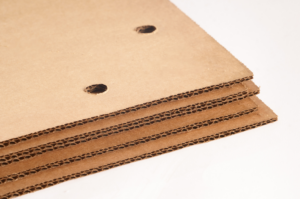
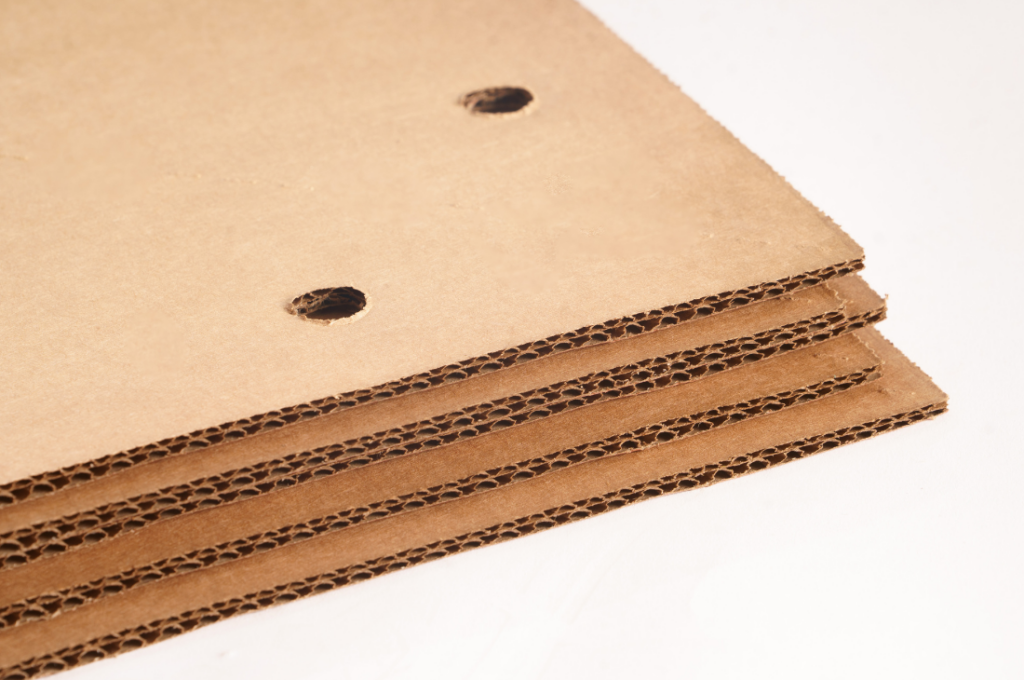
Cardboard strength is largely determined by its fluting (those wavy interior channels between the liner boards), as well as the number of layers and their spacing. More robust fluting and thicker liners produce stronger, more rigid boards that resist buckling under load.
Two Tests Used to Rate Cardboard Cremation Containers
Industry standards commonly rely on two forms of testing:
- Edge Crush Test (ECT)
A one-inch square of cardboard is compressed until it collapses, and the pounds of pressure required determine its ECT rating. This does not equate to weight capacity of a full container for cremation, but it gives a measurable indicator of board strength.
- Economy boxes often use grades around 350–450 lbs ECT
- Premium boxes can reach 750 lbs ECT or higher
- Burst Test (BT)
The burst test measures how well the container can contain internal forces and withstand external pressure by testing the resistance of both the liner boards and the flutes. Higher BT ratings generally signal stronger construction and better performance during movement.
These engineering details explain why premium containers support more lifting, transport, and repeated handling, while economy containers work well in controlled, stationary settings.
Scenario 1: Crematory On-Site, Minimal Lifting
For facilities that cremate on the same premises where remains are prepared, handling is often limited. Remains are transferred to a container for cremation, placed on a cart or lift, and moved directly into the chamber with little to no lifting.
In these cases:
- Economy containers typically perform well
- Structural demands are modest
- Presentation expectations for families may be lower
- Cost control may be prioritized without compromising safety
These operations benefit from the simplicity, practicality, and fair value of economy boxes when movement risk is minimal.
Scenario 2: Off-Site Crematory or Frequent Transport
Facilities that do not cremate on-site introduce entirely different stresses on the container. Remains may need to be carried, loaded, transported to a crematory, unloaded, and transferred again before cremation.
This creates structural load from:
- Weight concentration in the center
- Repeated lifting points
- Vehicle movement
- Uneven transfer surfaces
- Variable staff technique
In these environments:
- Premium containers or
- Reinforced two-pack containers
are often recommended because the extra strength reduces the risk of bowing or collapse during handling.
Premium containers are engineered for these realities, with stronger fluting, higher ECT/BT ratings, and double-wall construction that keeps the base rigid when lifted.
Why Weight Ratings Aren’t Used
Another common question is whether cremation containers have stated weight capacities. They generally do not, and for good reason: weight distribution varies dramatically from person to person.
A shorter, heavier individual may concentrate more weight at the center of the container, creating more stress during lifting than a taller, lighter individual of the same total weight. Because those variables cannot be controlled, ECT/BT ratings serve as the more reliable structural metric.
Scenario 3: High-Volume Crematorium Environments
Facilities that perform high volumes of cremations each month face wear-and-tear challenges. Repeated movement takes a toll on containers, lifts, rollers, and internal handling tools.
For these operators, durability is not about presentation — it’s about efficiency and reduced disruption. Premium containers help prevent:
- Handling delays
- Structural failures
- Staff strain
- Workflow bottlenecks
- Equipment damage
In many high-volume crematoriums, reinforced bases or double-wall construction become standard because cutting corners introduces operational risk that outweighs cost savings.
Scenario 4: Presentation Considerations
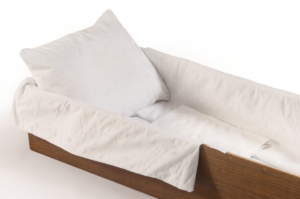
While cremation containers are not intended to function as rental casket inserts or viewing vessels, some facilities factor presentation into their choice — especially when families may see the container during transfer or handling.
Premium containers, including wood-grain finishes, provide a more refined appearance. While subtle, this consideration sometimes differentiates service standards a funeral home is striving to uphold.
For facilities that prioritize family-facing professionalism, premium models support that choice.
Economy Containers: When They Make Sense
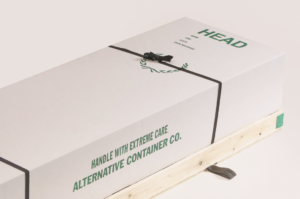
Economy cremation containers are built for:
- On-site cremation
- Minimal movement
- Cost containment
- Low handling complexity
- Efficient storage
They provide reliable performance for straightforward operations where the container functions as a static vessel rather than a transport tool.
Key advantages include:
- Lower cost per unit
- Lightweight handling
- Simpler workflows
- Adequate structural integrity for controlled environments
Premium Containers: When They Make Sense
Premium cremation containers provide benefits that show up during movement, not storage.
They are well suited for:
- Off-site cremation
- Facilities without on-site chambers
- Repeated lifting
- Vehicle transport
- Higher-weight individuals
- High-volume handling
Operational advantages include:
- Greater rigidity during lifting
- Reduced risk of buckling
- Better durability under center load
- Potentially smoother workflow
- Improved presentation when families observe transfer
For many operators, it’s not about luxury — it’s about reducing friction and preserving dignity during the most demanding parts of the workflow.
Reinforced or Specialized Solutions
For certain scenarios, even premium containers need additional support. Specialty solutions include:
- Two-pack reinforced boxes (with glued-in wood bases)
- Custom width or length
- Extra structural support for bariatric individuals
These builds are most commonly requested by:
- Off-site cremation operators
- Mortuary transport firms
- High-volume crematoriums
- Facilities with unique loading setups
Reinforcement prevents buckling, cracking, or collapse during vehicle loading, lift transfer, or chamber insertion.
Questions Funeral Professionals Should Ask When Choosing
Facilities can quickly identify the right option by answering five practical questions:
- Where will the cremation take place?
On-site vs. off-site determines transport needs. - How much movement occurs before cremation?
More movement increases structural requirements. - How are remains transferred?
Carrying vs. rolling vs. lifting impacts rigidity needs. - What space constraints are present?
Storage capacity influences ordering volumes and product selection. - What level of presentation does the facility provide?
Family-facing vs. operational-only scenarios differ.
Aligning products to workflow creates both operational efficiency and dignified care.
A Note on Cost vs. Value
Economy containers are not “cheap” and premium containers are not “luxury.” Both are engineered tools with defined purposes. The key is not minimizing spend — it’s avoiding mismatches that introduce risk.
The cost trade-off looks less like:
“Pay less vs. pay more”
and more like:
“Pay for what your workflow requires vs. pay again later in failure, replacement, or inefficiency.”
When chosen appropriately, both product classes deliver value without overspending or overbuilding.
The Bottom Line
Choosing the right cremation container comes down to fit, not price. A facility with minimal movement can operate efficiently with economy containers. A facility handling off-site transport or repeated movement benefits from premium options. High-volume environments often rely on reinforced builds to maintain consistency.
Facilities serve families in different ways. Cremation containers should support those workflows with practicality, durability, and dignity at every step.
At Alternative Container, our quality products, years of experience, and dedication to service are here to help you provide families with the care they need in their most difficult moments. To discuss container selection or request a quote, reach out to us today.